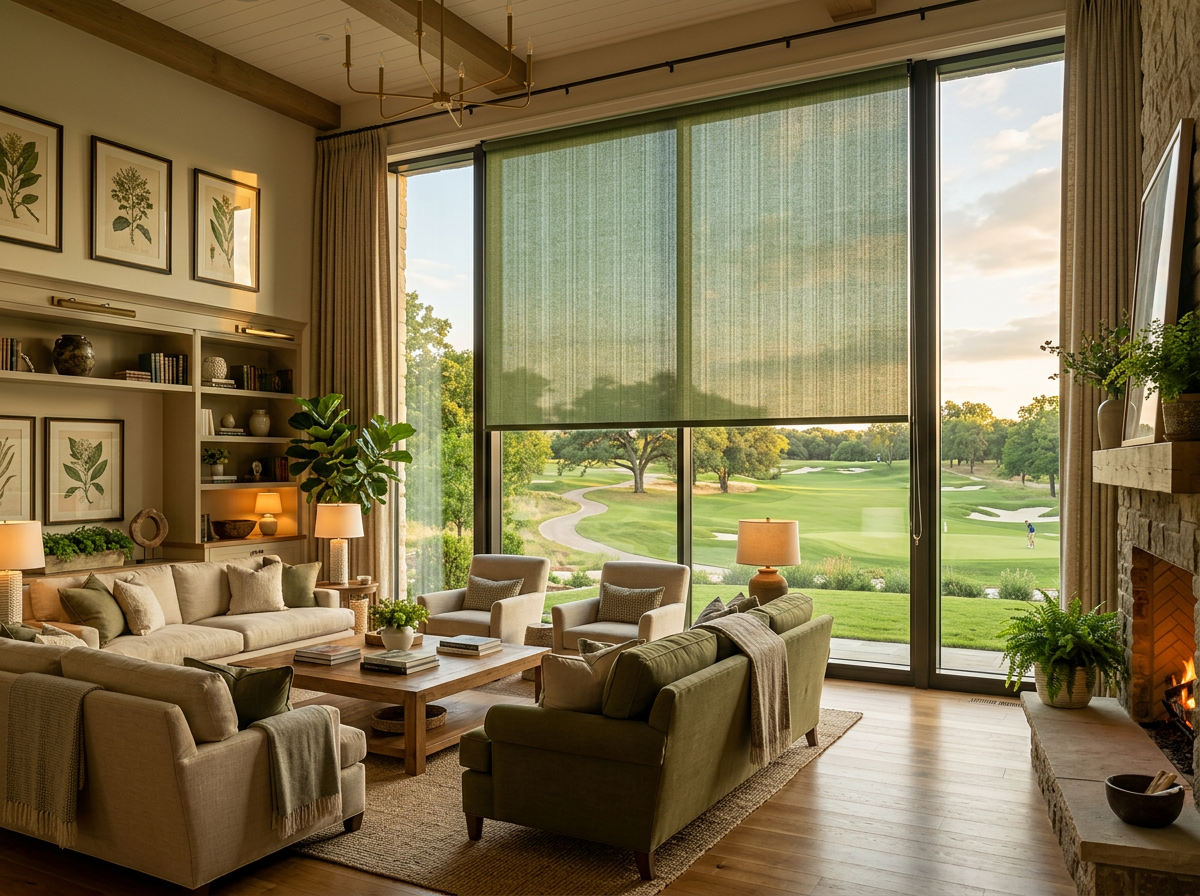
Three fabrics, three completely different jobs
Blockout is a coated fabric that stops light passing through it. It belongs in bedrooms, and especially in a west-facing bedroom on this side of Johannesburg, where the summer sun sits in the window until well after seven. It also adds a modest layer of insulation against the glass.
Sunscreen is an open-weave mesh with a stated openness factor — usually somewhere between 1% and 10%. It cuts glare and a large share of the heat and UV while you still see through it. On a fairway-facing living room this is nearly always the right call: the whole point of the window is the view, and a blockout blind simply deletes it.
Light-filtering sits between the two. It softens a room and gives daytime privacy without going dark. Good for a dining room, a study, a passage window that overlooks a neighbour.
The double bracket
Where one window has to do both jobs — see the course all afternoon, then go properly dark — a double bracket carries a sunscreen and a blockout blind on the same window. Two chains, or two motors, one clean headbox. It costs less than fitting two separate windows' worth of hardware and it is the single most useful thing we specify in Dainfern living rooms that double as media rooms.
Practical notes for estate homes
- Chain controls are fitted with child-safe tensioners anchored to the wall, as standard.
- A cassette or pelmet hides the tube and the roll, which matters on a wall where the blind is visible from the passage.
- Very wide glass is either split into two blinds on a shared bracket or motorised and linked, so the fabric never sags and the tube never bows.
- Side channels stop the light gap at the edge of a recess — the actual reason a "blackout" blind sometimes still wakes you.
- Reverse roll brings the fabric closer to the glass on a deep reveal; standard roll clears a handle. We decide that on site, per window.
What a roller blind is not
A roller is a single flat sheet. If you are picturing soft fabric gathering into horizontal folds as it lifts, that is a different product and not one we make. And if the real complaint is heat rather than light, no interior blind beats stopping the sun outside the glass — ask about roller shutters or zip screens instead.
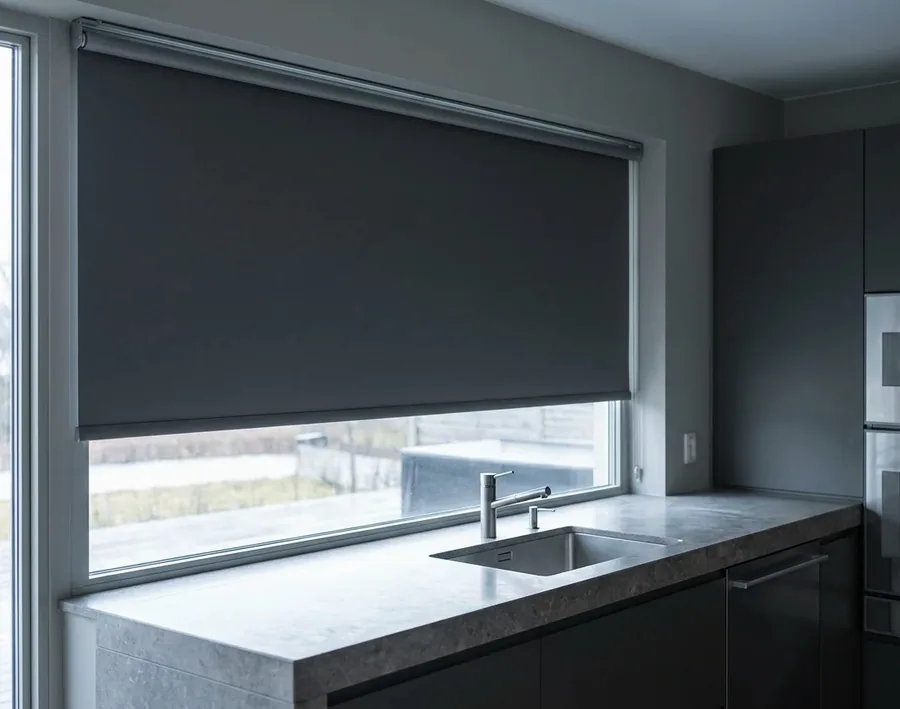
Also worth seeing
Fitting roller blinds across
Free measure
Get this priced for your windows
Tell us the rooms and roughly how many windows. One of our expert consultants will contact you shortly to arrange a free in-home measure with samples.
Thank you — that's with us.
One of our expert consultants will contact you shortly to arrange your free in-home measure.
What happens next
- A consultant phones you back to understand the rooms and agree a time.
- The measure happens at your home, with samples in the actual light of the room.
- You get a written quote, per window, that you can cut down or add to.
- Only then does anything get made. Nothing is ordered off a phone call.