Motorisation
Motorised blinds, for the windows nobody reaches
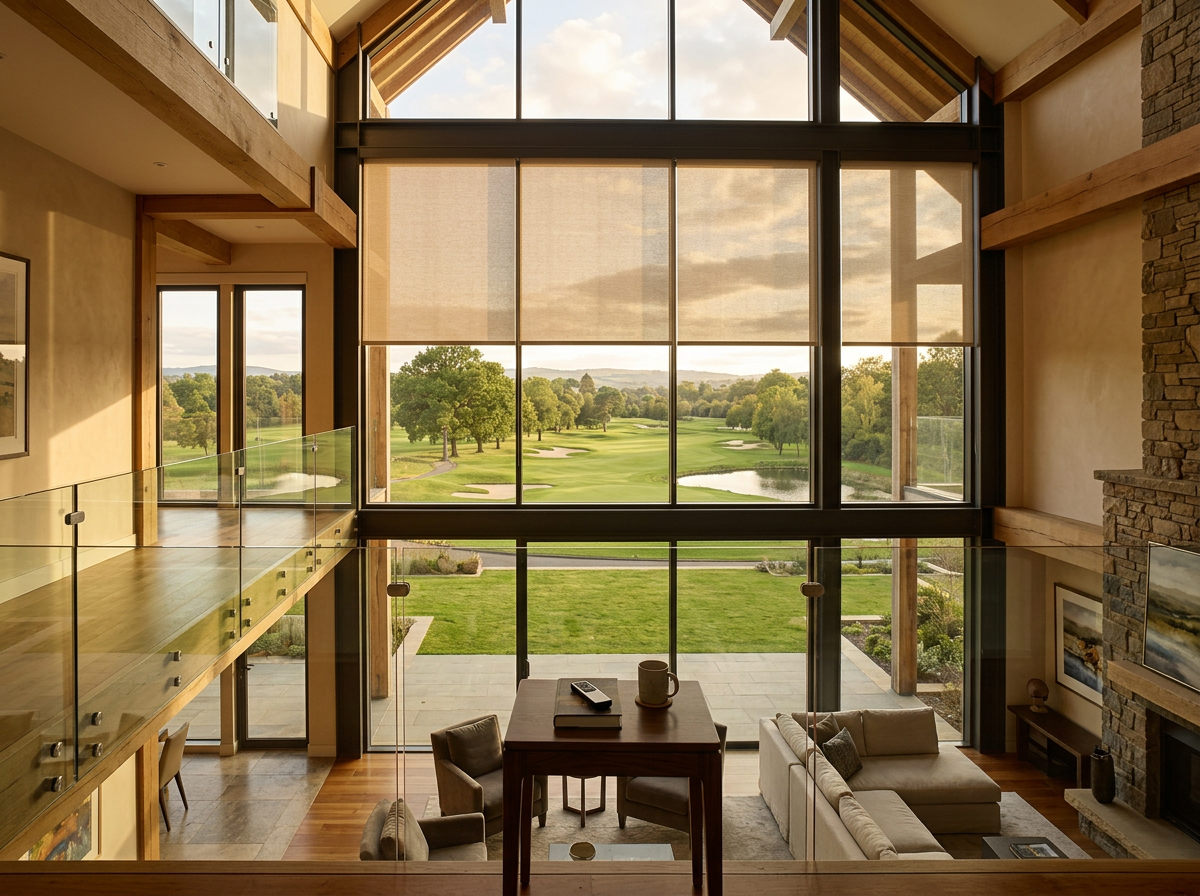
Double-volume glass above a stairwell, a clerestory strip over the living wing, a six-metre slider onto the patio. These are the openings that cook a room — and exactly the ones that stop being operated by hand after the first month.
Rechargeable or wired
Rechargeable tubular motors sit inside the blind's tube and run off an internal battery. They need no wiring at all: you charge them from a lead a couple of times a year, usually with the blind still up. This is what makes motorisation realistic in a finished Dainfern home, where chasing a wall means replastering and repainting a room you have already lived in.
Wired motors take permanent low-voltage or mains power. They are tidier, never need charging, and are the right answer if a ceiling is open or a wall is still to be plastered. If you are renovating, tell us before the bulkhead closes — a cable at that stage costs almost nothing and is close to impossible afterwards.
How you actually control them
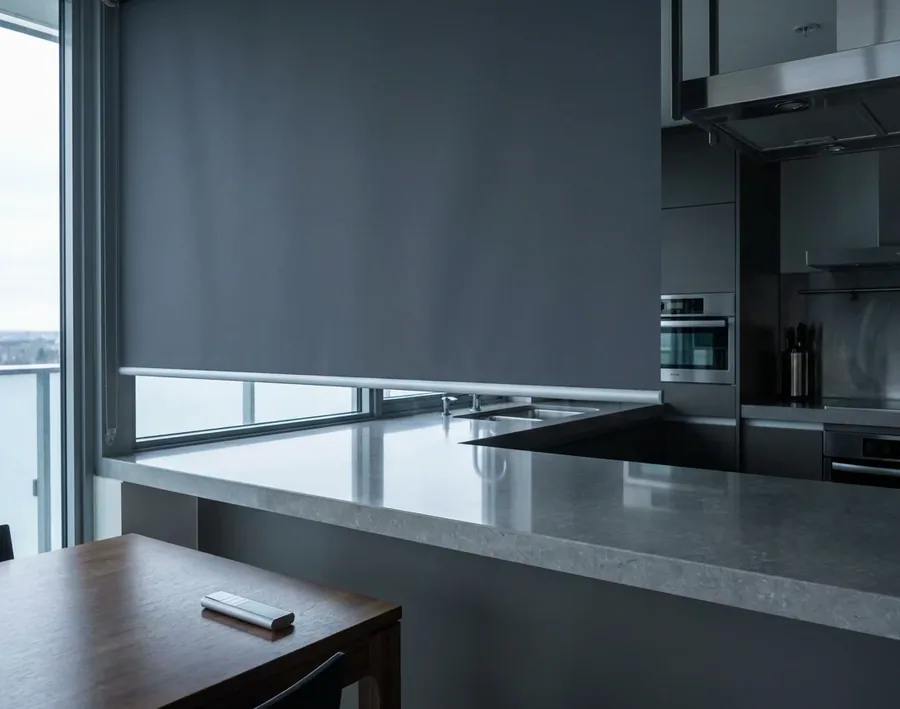
- Handheld remote — one channel per blind, or a channel per group, plus an all-blinds channel.
- Wall switch — a fixed point that never goes missing down the side of a couch.
- App and voice — via a bridge on your home network, if you want the blinds in with the rest of the house.
- Timers and sun sensors — the genuinely useful one here: drop the west side at three, lift it at six, without anyone deciding to.
Where it stops being a luxury
Anything above about 2.4 metres is already awkward on a chain. Above a stairwell it is a ladder job, so it never happens, so the blind stays up and the room bakes. Wide sliders are the other case: a five- or six-metre run of fabric is heavy enough that a chain becomes hard work, and a motor lets us run one blind where we would otherwise have had to split it into three.
Almost everything we make can be motorised — rollers, day/night blinds, venetians, verticals, cellular blinds, roller shutters, awnings and zip screens. What differs is the motor size and the mounting, which is decided per window on the measure.
Also worth seeing
Motorisation fitted across
Free measure
Get this priced for your windows
Tell us the rooms and roughly how many windows. One of our expert consultants will contact you shortly to arrange a free in-home measure with samples.
Thank you — that's with us.
One of our expert consultants will contact you shortly to arrange your free in-home measure.
What happens next
- A consultant phones you back to understand the rooms and agree a time.
- The measure happens at your home, with samples in the actual light of the room.
- You get a written quote, per window, that you can cut down or add to.
- Only then does anything get made. Nothing is ordered off a phone call.